Fast-Tracking Tissue Repair: How EWOT Accelerates Injury Recovery
Whether you are an athlete recovering from a torn ligament, managing chronic joint strain, or rehabilitating post-surgery, the primary bottleneck in tissue healing is almost always the same: oxygen delivery.
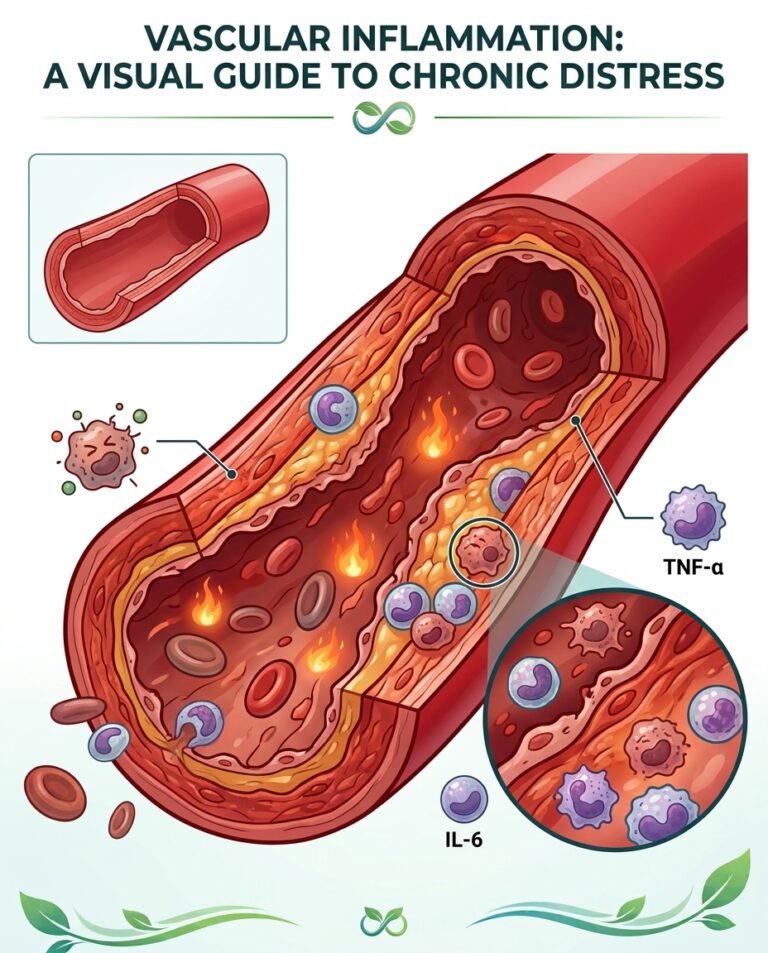
When muscle, tendon, or vascular tissue suffers an injury, local blood flow is compromised. Swelling and inflammation construct a physical barrier, restricting oxygen supply to the exact cells tasked with repairing the damage. Exercise with Oxygen Therapy (EWOT) solves this bottleneck by uniting active movement with concentrated oxygenation—creating the ultimate physiological environment for rapid recovery.
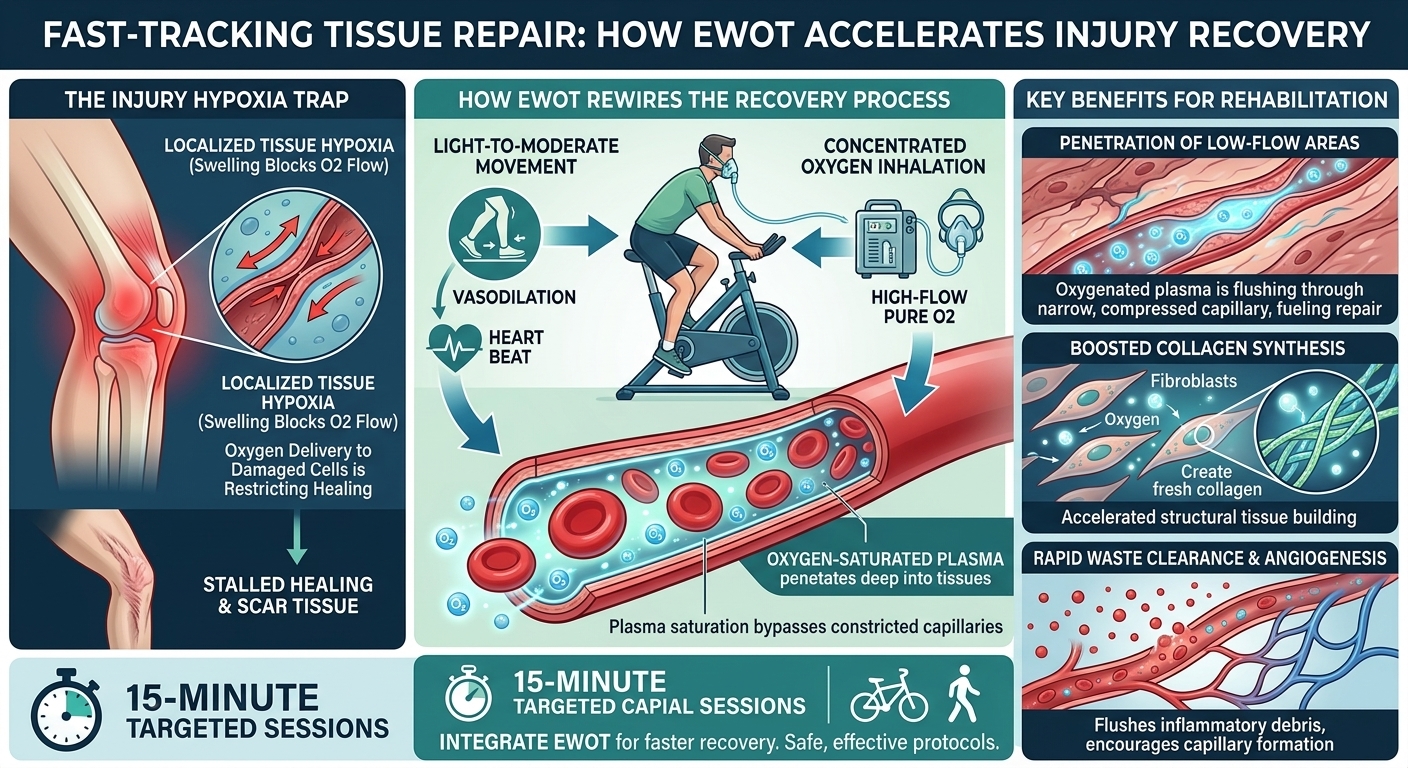
The Hypoxia Trap: Why Injuries Heal Slowly
Following an acute injury or repetitive micro-trauma, the body initiates an inflammatory cascade to clear damaged cells. However, this process creates a catch-22:
- Swelling & Fluid Accumulation: Inflamed tissue compresses micro-capillaries, reducing local blood circulation.
- Localized Tissue Hypoxia: Cells run out of the oxygen needed to manufacture collagen and assemble new structural proteins.
- Stalled Healing & Scar Tissue: Prolonged hypoxia slows down cellular division, increases pain signals, and leads to the formation of dense, non-elastic scar tissue.
To break this cycle, the damaged tissue needs an influx of oxygen. However, standard passive oxygen delivery struggles to penetrate deeply into swollen, low-flow areas.
How EWOT Rewires the Recovery Process
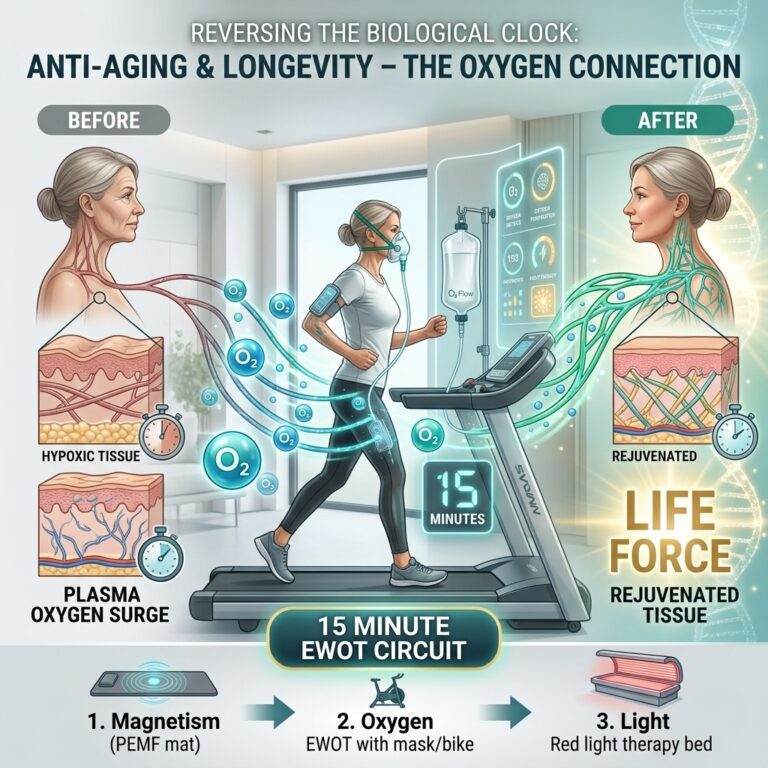
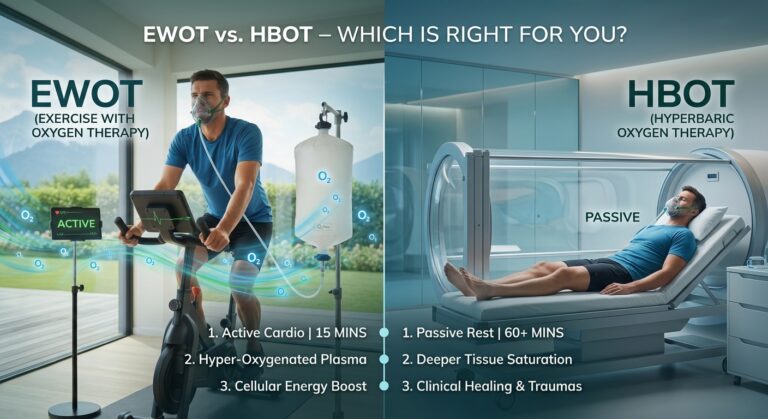
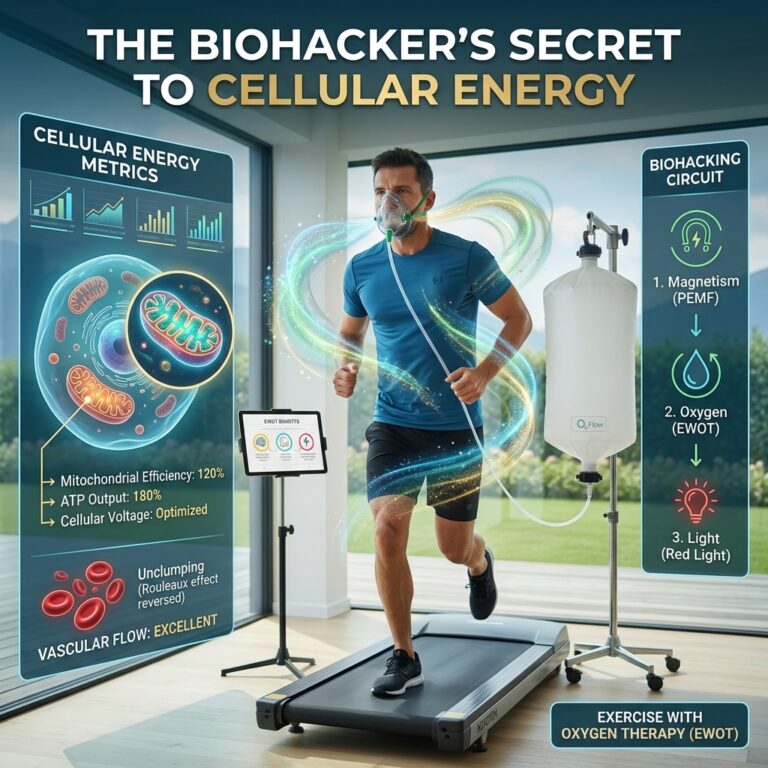
EWOT pairs light-to-moderate physical movement (such as cycling or walking) with the inhalation of high-flow, concentrated oxygen. This combination initiates a dual-action therapeutic mechanism:
1. Hyper-Saturating the Blood Plasma
Under normal conditions, red blood cells (hemoglobin) carry almost all of your body’s oxygen, leaving blood plasma with only a trace amount. Breathing concentrated oxygen during physical exertion forces oxygen under pressure directly into the liquid plasma. This oxygen-rich plasma bypasses constricted or damaged capillaries, delivering vital fuel directly into hypoxic, injured tissue.
2. Muscle Contraction as an Oxygen Pump
Physical movement stimulates vasodilation—expanding blood vessels and elevating heart rate. As your muscles contract, they act as mechanical pumps, driving the oxygen-saturated plasma deep into micro-vasculature that passive treatments simply cannot reach.
Key Benefits of EWOT for Injury Rehabilitation
- Accelerated Collagen Synthesis: Fibroblasts—the primary cells responsible for laying down new collagen fibers in tendons, ligaments, and skin—require high concentrations of oxygen to synthesize healthy structural tissue.
- Rapid Clearance of Lactic Acid & Metabolic Waste: Enhanced oxygenation fuels aerobic pathways, helping clear inflammatory waste products and metabolic debris from injured tissue beds.
- Reduced Post-Exercise Soreness & Swelling: High-flow oxygen helps downregulate persistent inflammatory pathways while encouraging lymphatic drainage to reduce localized swelling.
- Neovascularization (Building New Blood Vessels): Repeated hyperoxic signals encourage angiogenesis—the formation of fresh, healthy blood capillary networks that restore permanent blood flow to previously injured zones.
Integrating EWOT into Your Rehabilitation Protocol
One of the greatest advantages of EWOT during injury recovery is its low barrier to entry. Because the therapy relies on plasma saturation under pressure rather than maximum physical strain, sessions do not require high-intensity workouts.
- Duration: 15-minute targeted sessions.
- Intensity: Low-impact movement (stationary bike, treadmill walk, or upper-body ergometer) tailored safely around your injury constraints.
- Frequency: 3 to 5 times weekly during active rehabilitation.
By supplying your cells with concentrated oxygen at the exact moment your vascular system is primed through movement, you give your body the essential tools to rebuild stronger, cleaner, and faster.
Movement opens the door; oxygen fuels the repair.