Extinguishing the Inner Fire: How EWOT Reduces Vascular Inflammation
Vascular inflammation is often called a “silent threat” because it develops without obvious symptoms. While acute inflammation is a natural, healthy response to tissue injury, chronic low-grade vascular inflammation acts like an unseen fire inside your circulatory system—stiffening arteries, damaging delicate endothelial linings, and accelerating biological aging.
To safeguard long-term cardiovascular health, we must do more than simply manage cholesterol or blood pressure; we must address the root physiological drivers of vascular inflammation. Exercise with Oxygen Therapy (EWOT) offers a potent, nature-aligned intervention that calms inflammatory pathways while rejuvenating the blood vessels from the inside out.
Understanding Vascular Inflammation & Endothelial Dysfunction
Your blood vessels are lined with a paper-thin layer of cells called the endothelium. The endothelium acts as the master regulator of your circulatory system—controlling blood vessel expansion (vasodilation), blood clotting, and inflammatory responses.
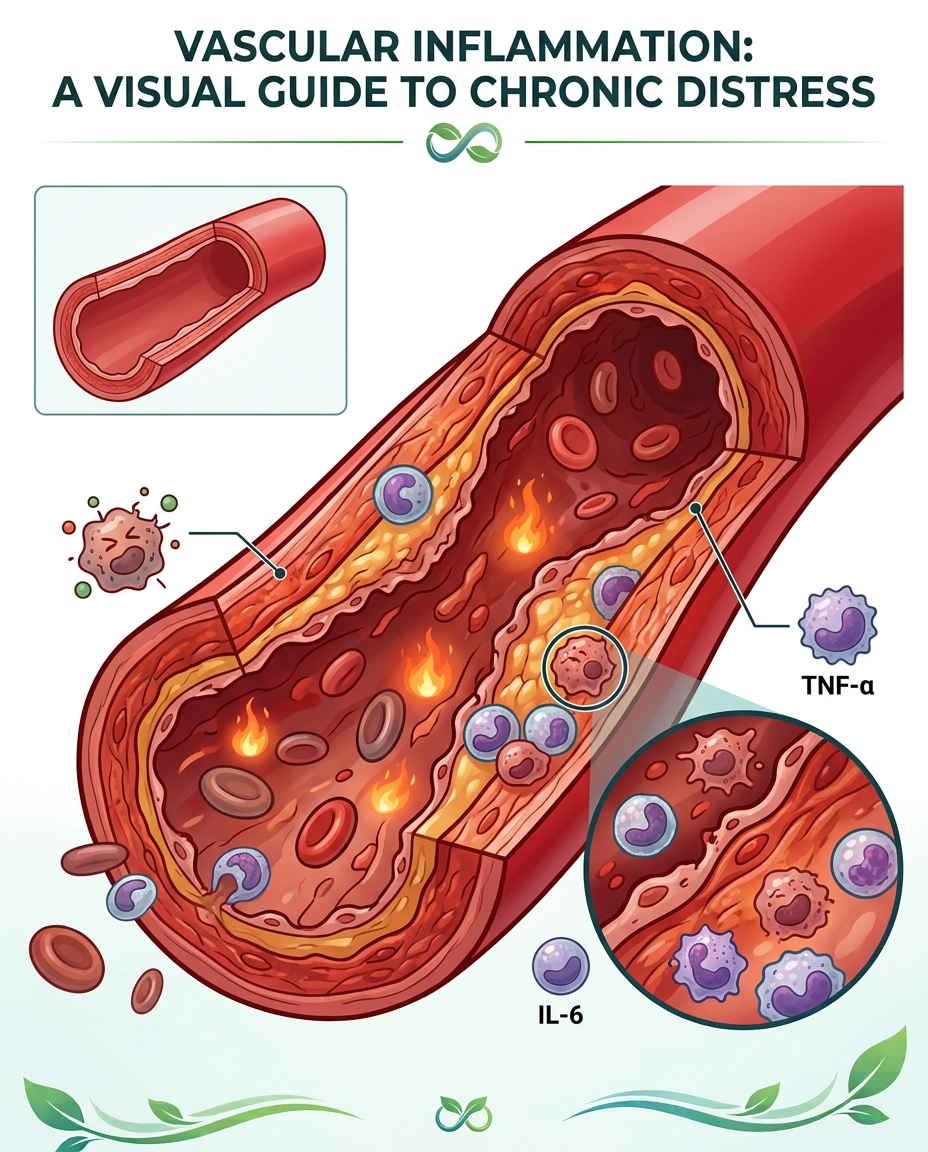
When exposed to systemic stress, poor diet, toxins, or physical inactivity, the endothelium becomes damaged and inflamed. This triggers a destructive cascade:
- Oxidative Stress & Nitric Oxide Depletion: Inflamed endothelial cells produce fewer signaling molecules like nitric oxide ($NO$), causing blood vessels to constrict and lose their natural elasticity.
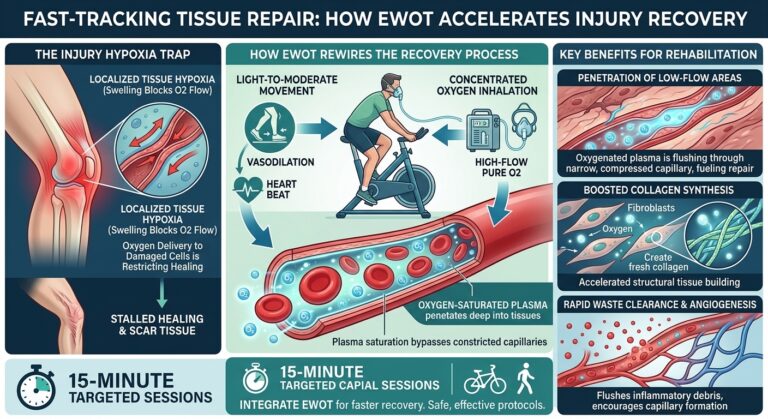
- Capillary Constriction & Hypoxia: Inflamed, narrowed capillaries slow down blood flow, leaving surrounding tissues starved of vital oxygen.
- Inflammatory Cytokine Cascade: Hypoxic tissues signal the immune system to release pro-inflammatory proteins (such as IL-6 and TNF-alpha), worsening arterial stiffness and systemic fatigue.
The EWOT Mechanism: Cooling the Inflammatory Cascade
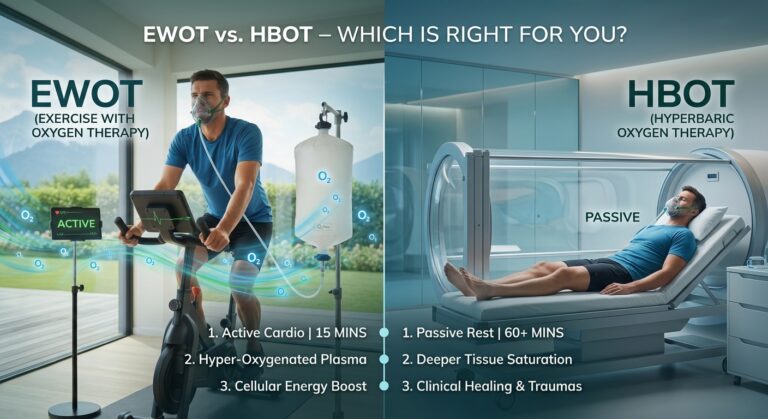
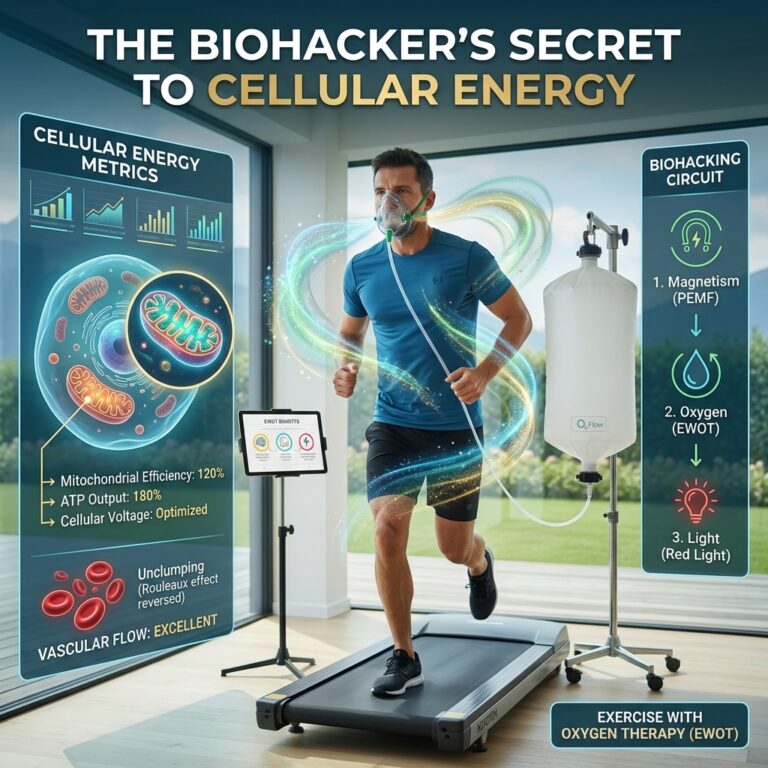
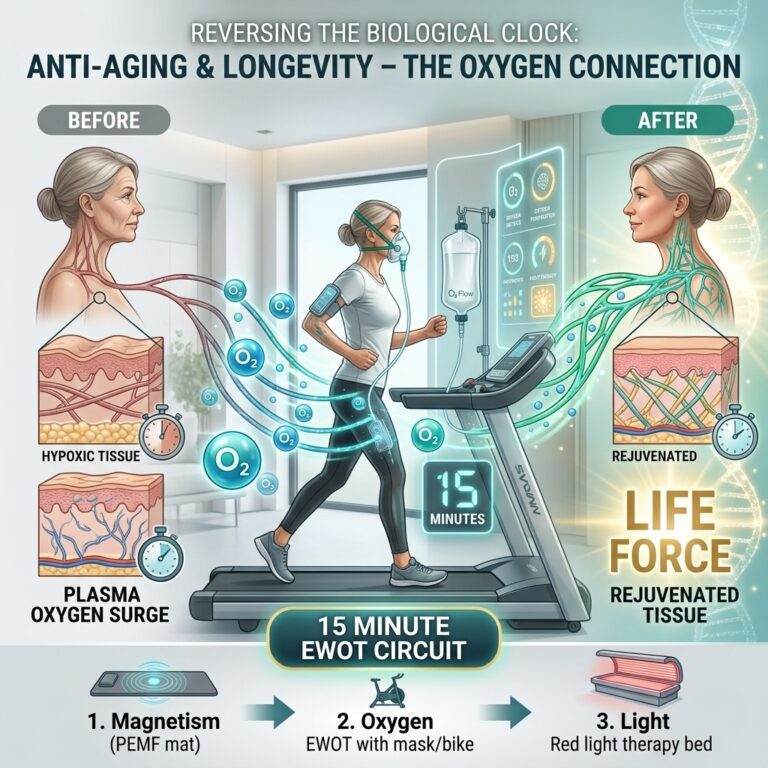
EWOT combines light-to-moderate physical movement with high-flow, concentrated oxygen to break this cycle through targeted bioenergetics.
Light Exercise (Shear Stress + Endothelial Activation)
                         +
High-Flow Oxygen (Plasma Saturation + Anti-Inflammatory Signal)
                         =
Nitric Oxide Surge, Cytokine Reduction & Microvascular Repair
1. Harnessing Endothelial “Shear Stress”
When you move during an EWOT session, increased heart rate and blood flow create gentle fluid friction along the inner lining of your blood vessels—a force known as laminar shear stress. Shear stress stimulates endothelial cells to release stored nitric oxide, instantly dilating constricted micro-vessels and restoring arterial flexibility.
2. Saturating Plasma to Eliminate Micro-Hypoxia
In inflamed vascular beds, red blood cells struggle to squeeze through narrowed capillaries. EWOT bypasses this bottleneck by forcing oxygen directly into the liquid blood plasma under pressure. Super-oxygenated plasma easily glides through inflamed micro-capillaries, delivering critical oxygen to hypoxic tissue and shutting down the biological “alarm system” that drives chronic inflammation.
3. Downregulating Pro-Inflammatory Cytokines
Flushing tissues with high levels of oxygen during physical exertion helps downregulate systemic inflammatory markers (such as C-reactive protein and TNF-alpha) while upregulating anti-inflammatory defenses. This transition shifts your body out of a state of chronic cellular distress and into an optimal environment for tissue repair.
Key Longevity Benefits of Reduced Vascular Inflammation
- Restored Vessel Elasticity: Regular sessions help reverse arterial stiffness, supporting healthy blood pressure levels naturally.
- Enhanced Micro-Circulation: Oxygen reaches previously restricted capillary networks in key organs, including the brain, heart, and kidneys.
- Mitochondrial Protection: Calming systemic inflammation prevents oxidative damage to cellular powerhouses, preserving cellular energy production (ATP).
- Faster Post-Exercise Recovery: Removing vascular bottlenecks allows efficient clearance of metabolic debris, reducing joint stiffness and systemic fatigue.
Integrating EWOT into an Anti-Inflammatory Routine
Addressing vascular health does not require grueling, high-intensity workouts that place undue stress on joints or the heart. EWOT relies on short, targeted 15-minute protocols designed to maximize plasma saturation without causing physical burnout.
- Duration: 20 minutes per session.
- Pace: Steady, low-to-moderate movement (cycling or walking) to maintain a consistent heart rate and optimal shear stress.
- Consistency: 3 to 4 times per week to continuously signal vascular relaxation and systemic repair.
By pairing natural movement with pure, concentrated oxygen, you give your vascular system the ideal conditions to douse cellular inflammation, restore flexible blood flow, and extend your overall healthspan.